RAG Explained: How AI Finds Answers in Your Company Knowledge
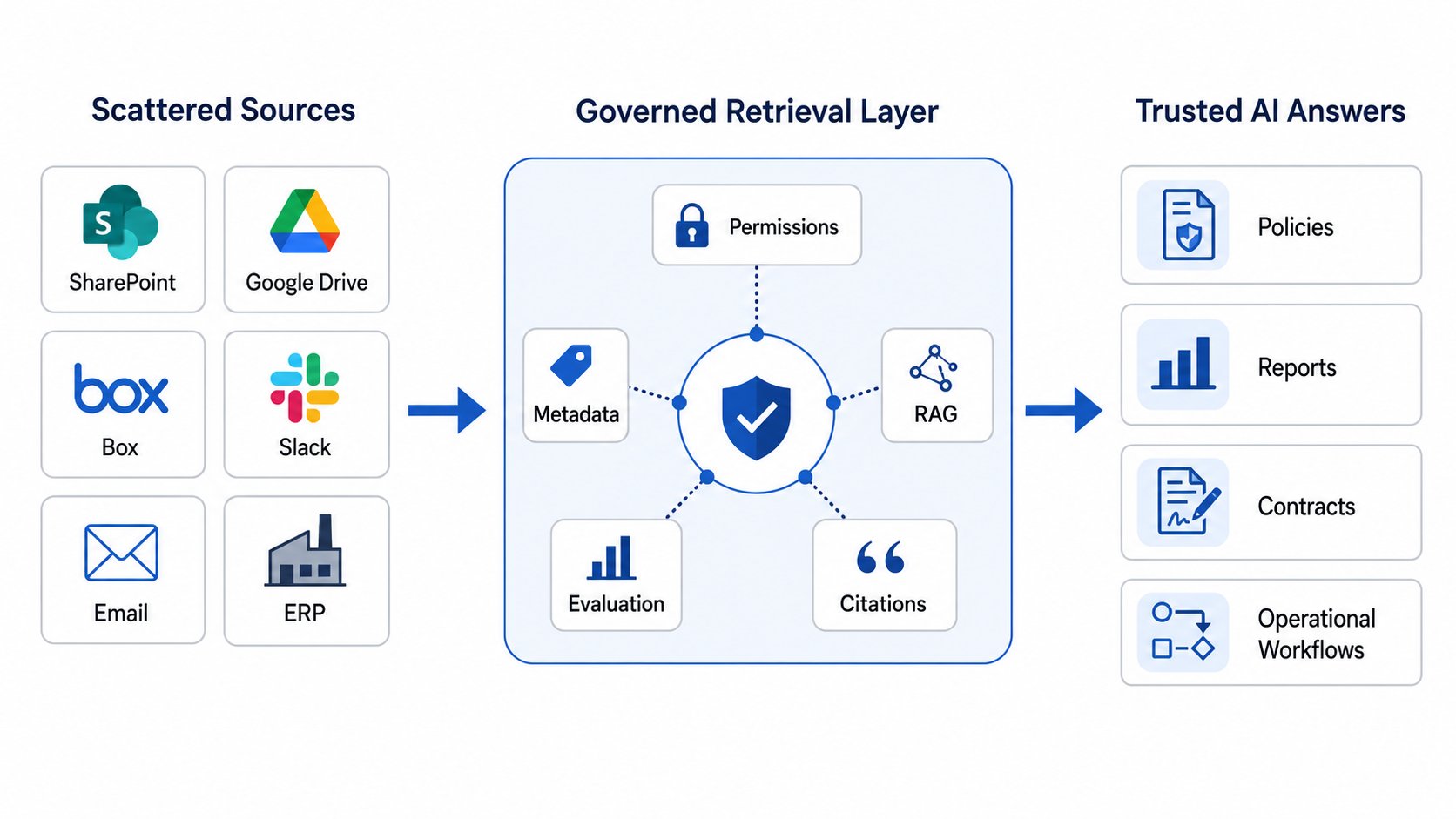
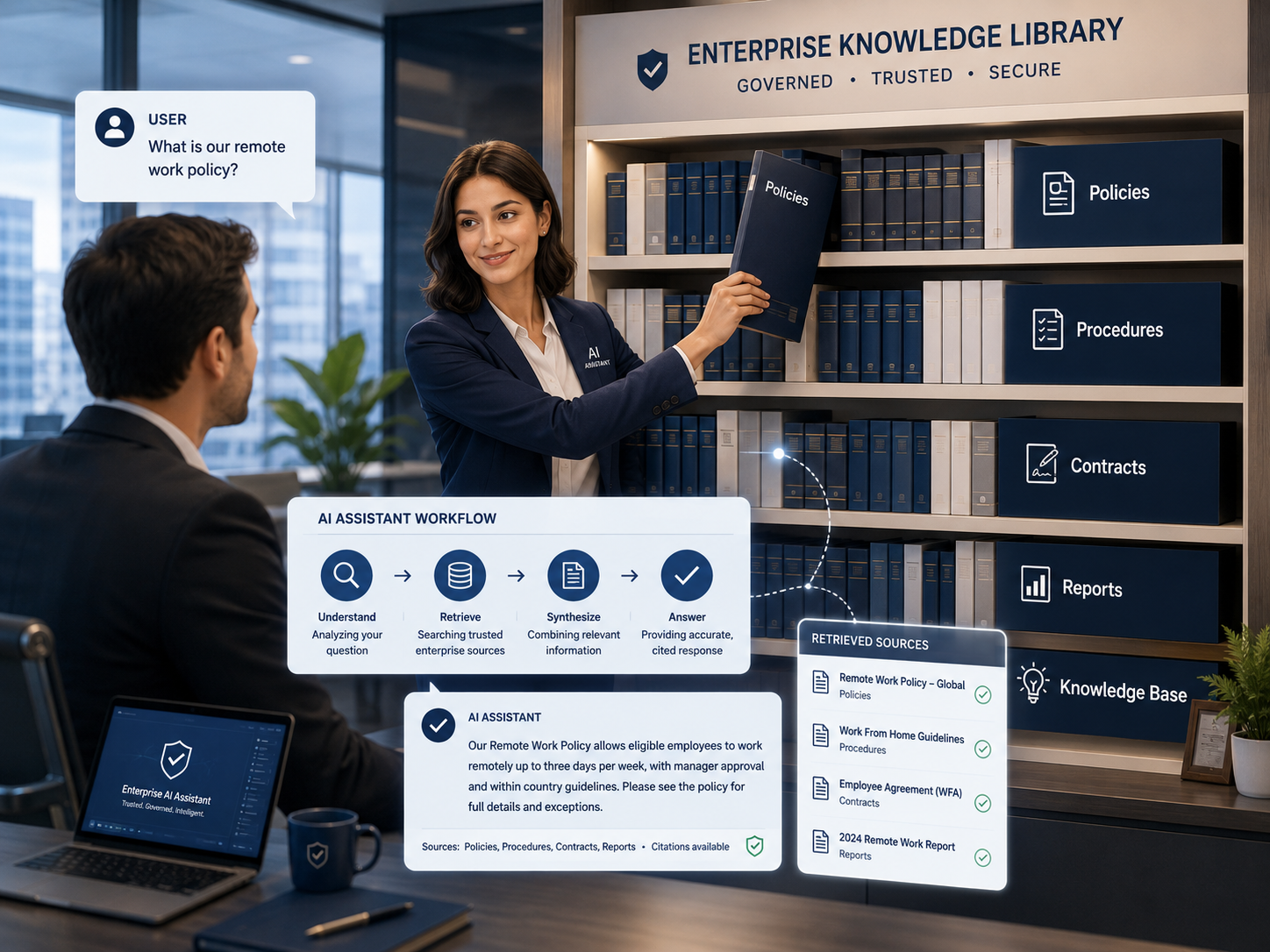
RAG allows AI to search your organization's documents, retrieve relevant information, and use that information to generate an answer.

EAIS helps mid-market organizations improve high-value work slowed by manual handoffs, scattered information, and unclear ownership. We identify the right place to start, decide where AI can help, and prove the approach before it becomes part of everyday operations.
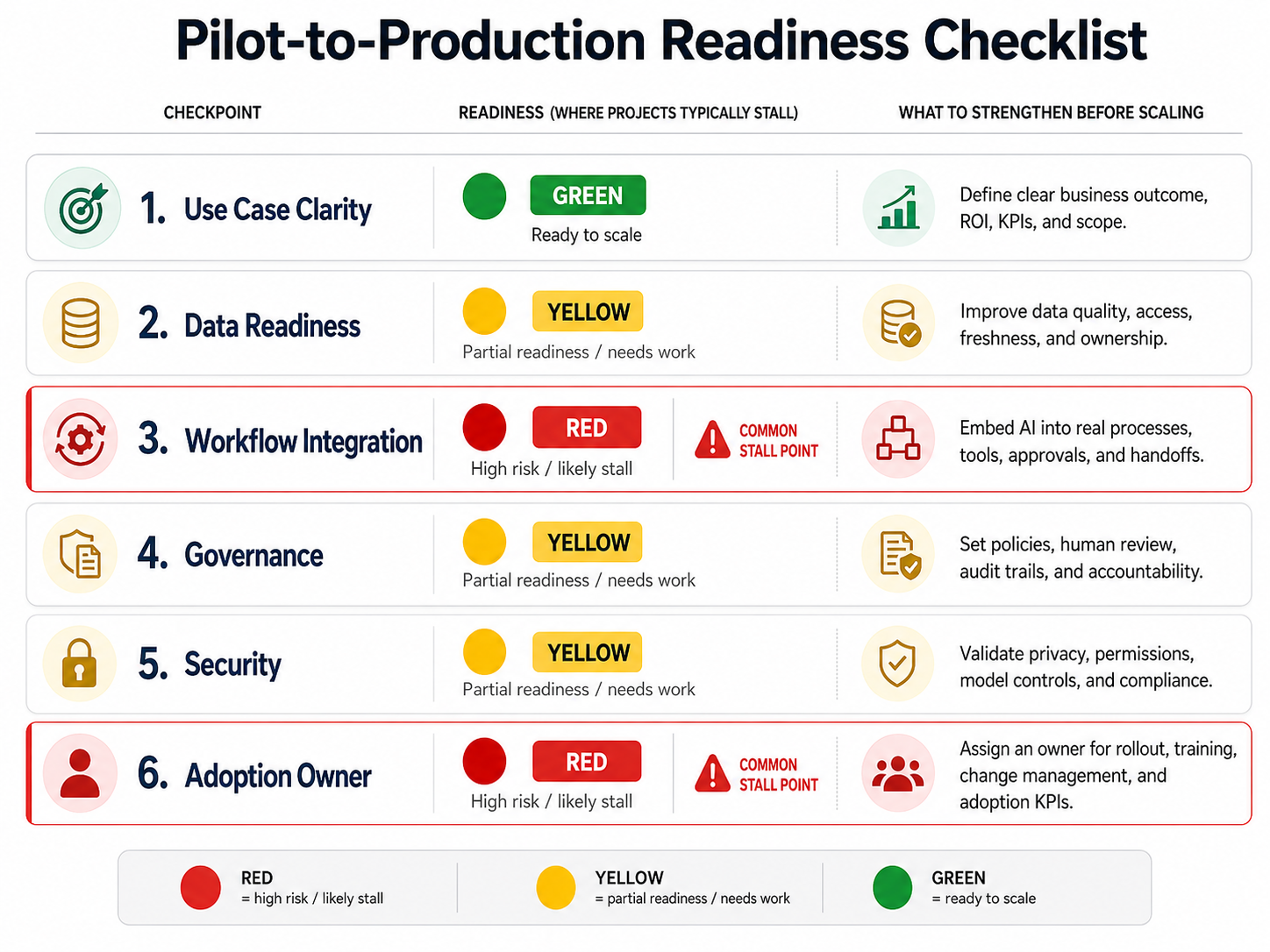
Common blockers include unclear ownership, fragmented information, undefined safeguards, and no practical plan for how the work should change. EAIS helps leadership understand how the work happens today, what needs to be fixed first, and which opportunity is safest to test.
We help your team decide how the work should run, who owns each decision, what happens when something goes wrong, and what evidence is needed before moving forward. The goal is practical: less rework, fewer unnecessary handoffs, faster turnaround, and earlier visibility when something is off track.
Start with one piece of work, or compare several. Each step ends with a decision your team can act on.
Start here if you already know which work needs attention.
One process, 10 business days. We agree how the work should run, who owns each decision, where AI can help, and whether to build, buy, defer, or stop.
Start here if you are comparing several possibilities.
Usually 4 to 6 weeks. We compare the options side by side so leadership can decide what to fix, build, prepare, defer, or stop.
Explore the Audit →Start here if you are ready to create and test a solution.
We try one bounded piece of work in real use, manage the risks, and produce the evidence needed for the next decision.
Start here if you need support after launch.
We help handle exceptions, support the people using it, and improve how the work runs once it is live.
EAIS works with your team to test the new way of working, train the pilot group, put safeguards in place, and hand over practical materials your team can use after launch.
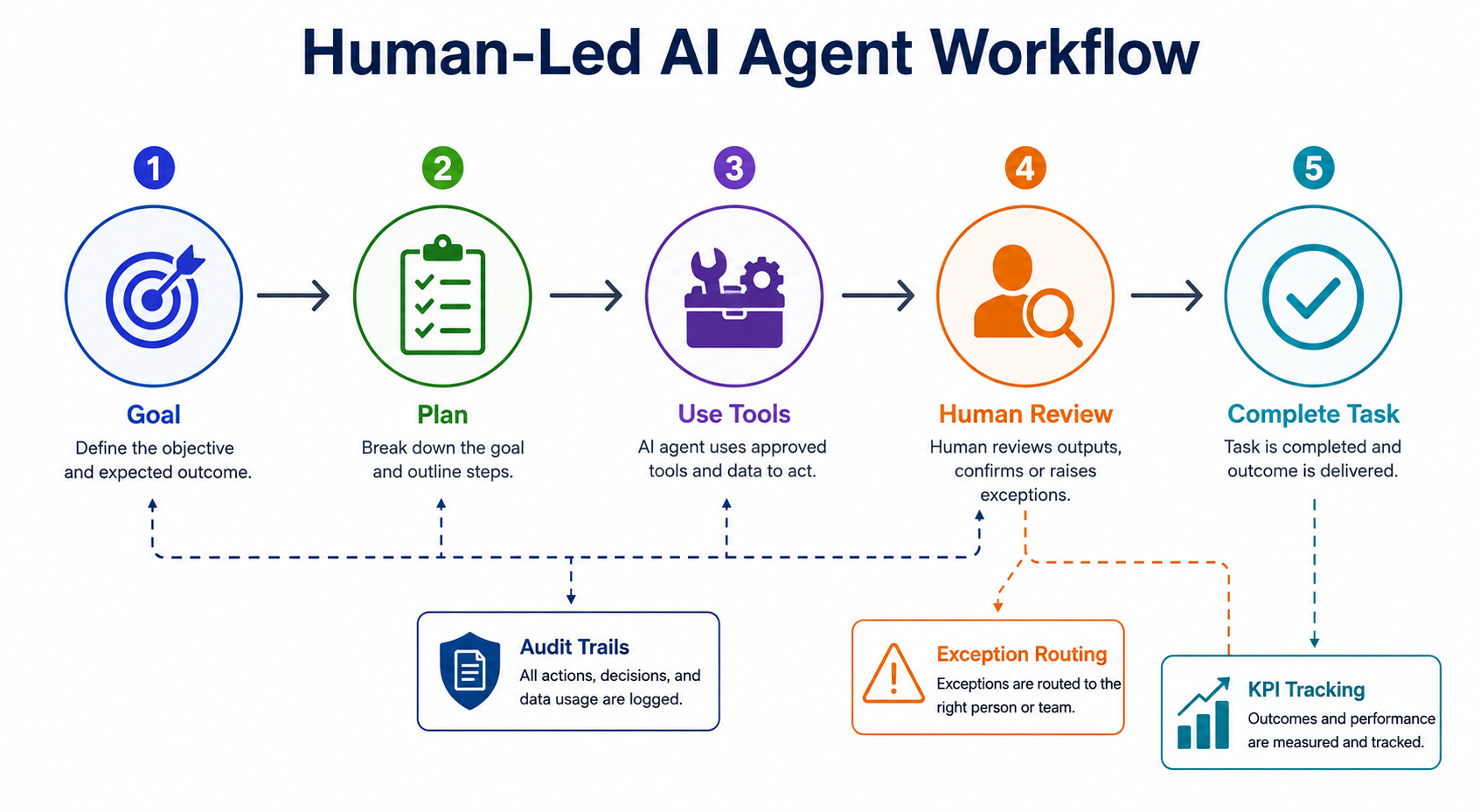
It connects how the work happens today, who owns each decision, where a person must review the output, what improvement we are aiming for, and how the work keeps getting better after launch.
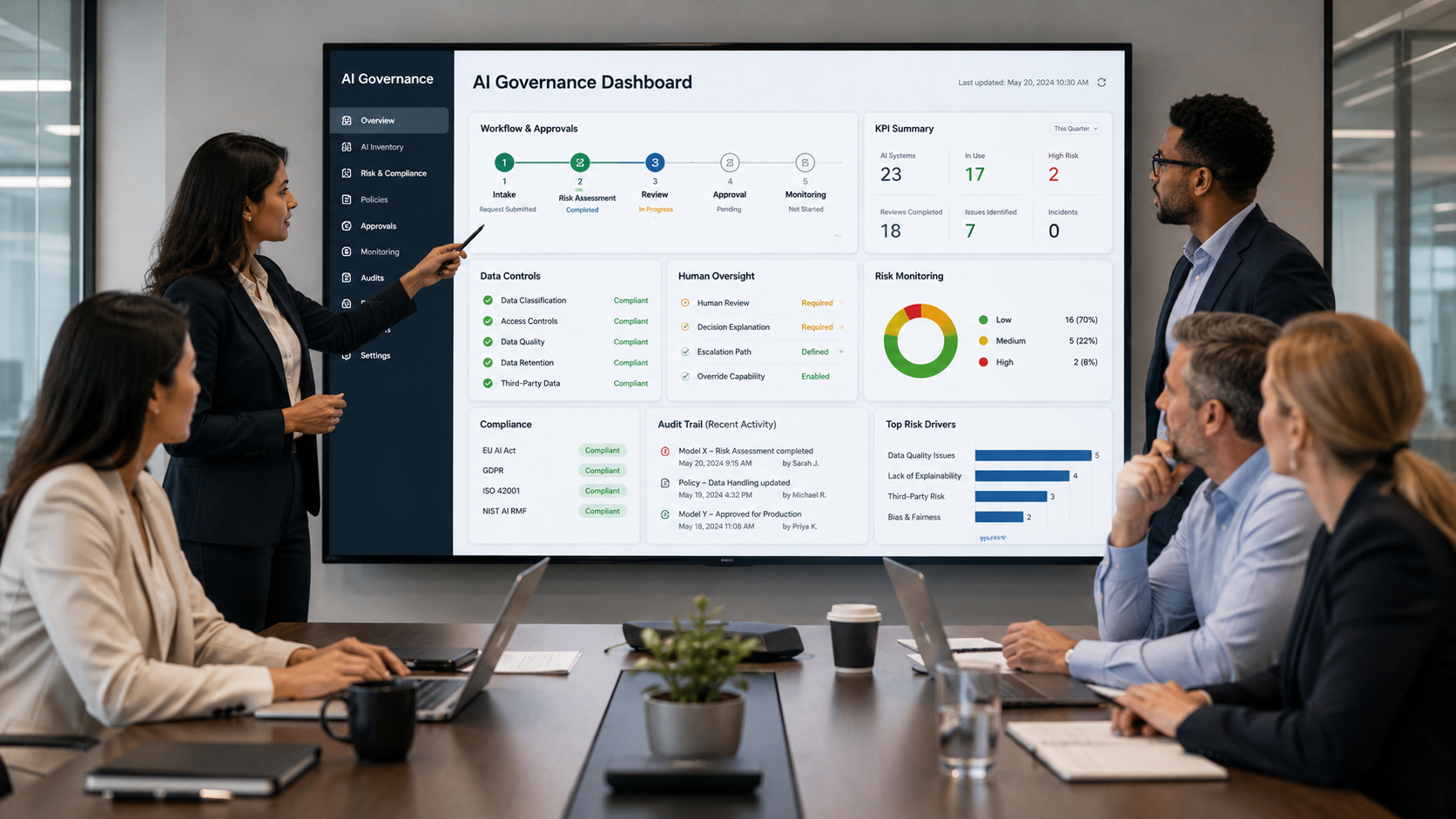
Rules, review steps, and safeguards agreed before AI touches important work.
Designed around the people who do the work, so the change holds.
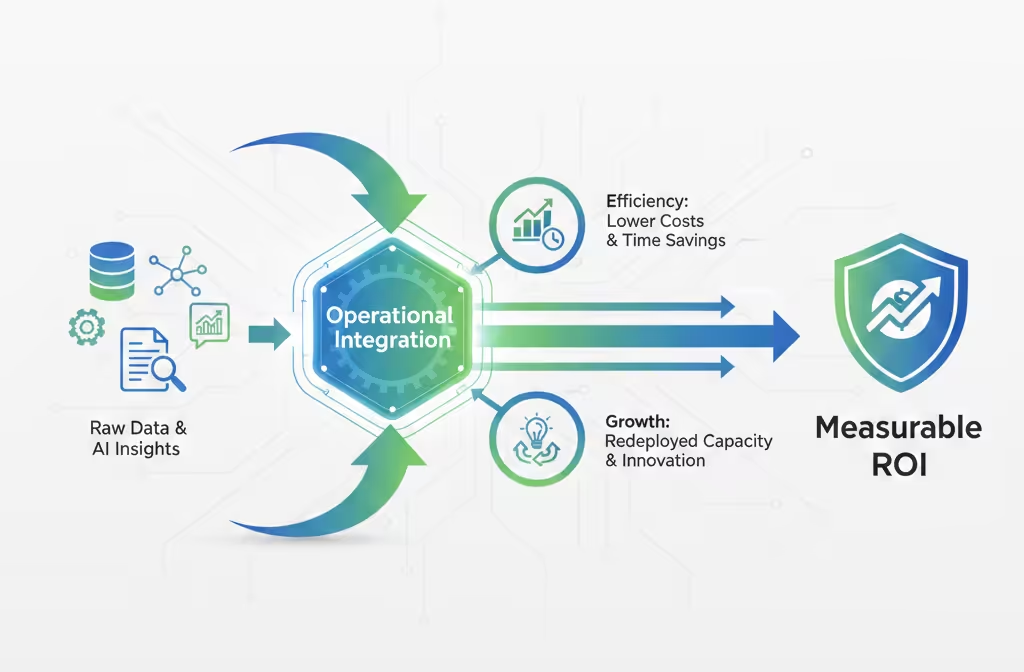
Tied to a specific gain such as less rework, faster turnaround, or fewer handoffs.
Depending on the problem, EAIS may help a team find answers across approved company information, draft documents with the supporting sources attached, bring information from existing systems into one clearer view, or automate repetitive steps and handoffs.
EAIS is not tied to a specific platform. We can work with approved tools already in your environment, or design and build a new workflow, connect systems, and create an internal tool when the work requires it.
Before anything goes into regular use, we agree on who can access it, where a person must review the work, and how we will know whether it is helping.
A Build & Prove Sprint is designed to show what was tested, what the results were, what risks were managed, whether the team actually used it, and whether the next step is worth the investment. Measured operating results are the goal of that step, not something we claim before the work is done.
Your team leaves with the tools, instructions, and decision records needed to run, review, and improve the work. Client-specific details stay private. The examples below show the structure.
Each step, owner, decision, review point, and exception path needed to operate the work day to day.
The evidence, safeguards, and review requirements the work must meet before it moves from testing into regular use.
A concise record of the evidence reviewed, risks surfaced, decision reached, and recommended next step.
Plain instructions for the people running the work, including what to watch, how to handle exceptions, and when to step in.
This is readiness and assessment work, not an implementation result. Details are anonymized and generalized, and figures are withheld.
An AI Workflow Readiness Audit and technical assessment for a software-enabled operations company preparing for significant growth.
Situation: A software-enabled operations company preparing for significant growth asked EAIS for an AI Workflow Readiness Audit and technical assessment.
What EAIS found: Security gaps, unreliable data syncing between systems, unclear ownership at handoffs, and growth assumptions that the current setup could not support.
What EAIS completed: A review of the live system and real production signals rather than internal assumptions, and a readiness assessment of the workflows leadership was considering for AI.
What EAIS recommended: Stabilize the critical work first, make the weak points visible, strengthen how information moves between systems, and start AI where the work is most ready. These are recommendations, not work EAIS has delivered on this engagement.
Decision enabled: Leadership could choose a staged path to safer growth, decide who holds technical authority, and agree on a short list of AI opportunities worth testing first.
What the client retained: A prioritized sequence with named owners and review points, usable without further EAIS involvement.
EAIS trains the people who will run the work day to day, so they know what changed, what to check, and who to go to when something looks wrong.
Hands-on training and ongoing support for the people responsible for the work: how to run it, how to spot problems early, and how to keep improving it after launch.
EAIS works best where important work moves through people, documents, and systems: architecture, engineering, consulting, and other project-driven firms. We define fit by operating conditions, not industry labels.
High-value client and project work where deadlines, scope, and margin depend on coordination
Document-heavy workflows: proposals, submittals, contracts, reports, and reviews
Approvals, sign-offs, and reporting cycles that stall when one person is unavailable
Manual handoffs across teams and systems, where work is re-keyed or lost in email
We also work in regulated and trust-sensitive environments, where the same operating conditions apply and the evidence requirements are higher.
Insights on building reliable, production-grade AI.